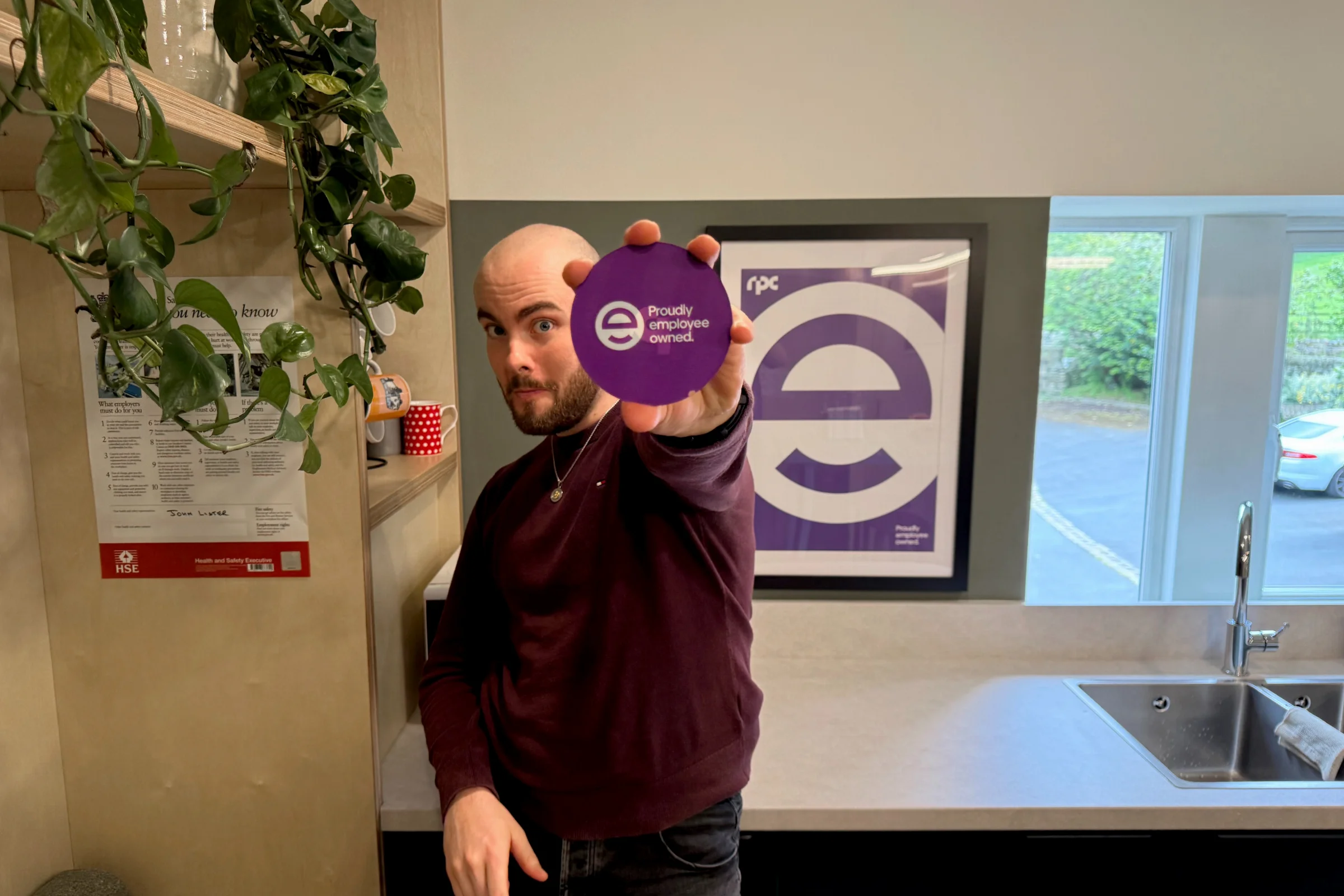
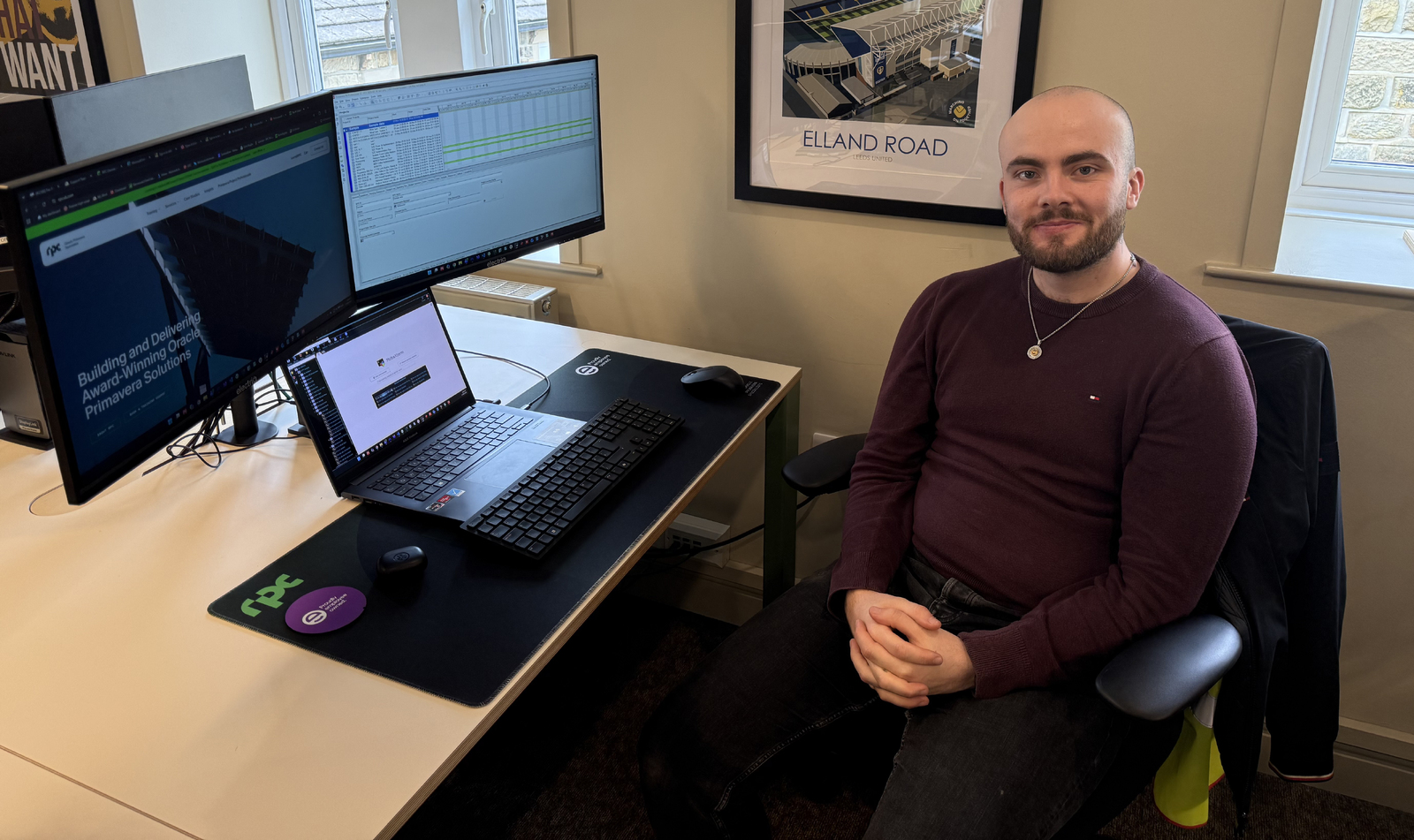
This EO Day, Employee Trustee Chris W took time out to check in with the most recent employee owner to join our team, Sam Brown, as he completes his qualifying first year as an employee and earns his EO stripes.
Chris: Obviously we should start with ‘Welcome!’ You've been with us a year now, so I guess we could start from the beginning, which would be asking what initially attracted you to joining RPC. Was the employee ownership model something that attracted you?
Sam: I didn't even know RPC was employee owned before I joined, so the answer is no, it wasn't what attracted me. However, during the interview, which probably lasted around 2 hours, I'd say about an hour of that was talking about employee ownership, which is something I wasn't aware of. So I was asking plenty of questions and the more you get told, it's quite an appetising deal, isn't it, when they say after a year you're an employee owner and you're entitled to this, this and this … Definitely leaving the interview, it was something that I remember going home and telling my mum and dad and my friends about, because it's quite unique, isn't it? It's not a common thing.
Chris: So it's something that didn't necessarily attract you to apply, but once you found out about it during the interview process, it was a compelling thing to make you more interested in joining the business?
Sam: Spot on.
Chris: Before joining RPC, had you heard of employee ownership or was it all new?
Sam: Never heard of it. Genuinely never even knew it was a possibility. I remember going home and talking to my dad about it and he told me about the model that John Lewis have, but until then I didn't even know it was a thing. The information wasn't readily out there in my hemisphere!
Chris: So you've been with us a year now. Before I start asking questions about being an owner, perhaps an interesting question is how do you feel being an EOT has impacted RPC as a culture and as a business?
Sam: It gives a real team environment vibe, because everyone's working towards one common goal. Obviously, sometimes in other companies, there's a lot more self-interest in there because everyone's goals aren't as aligned as maybe in an employee ownership. You know, look at our Teams backgrounds: it's literally, it's right up there front and centre. So it's something that everyone wears as a bit of a badge of honour and the company wears as a badge of honour in general.
When I was working on a big Unifier project, Dave [Hurren] kept telling us, this is your company, you know, the work that we put in, the work that we show to the customer reflects us and reflects you and will only benefit you the better that work is, so it's in everything that we do really in terms of executing work. You know, when you necessarily might have one of those days where you feel a bit tired and you don't want to push that extra 10% out, it makes you think, well, no, what I'm delivering to the customers, I own that. In terms of the work culture, it's right there, front and centre.
Chris: Do you think that's the biggest difference compared to working for a non-EOT company, that feeling that you're part of something together?
Sam: Exactly. I'm mainly from a hospitality background, but I've worked in a massive corporate machine too, where it's a pretty dog-eat-dog, with everyone almost trying to jump on top of each other to get to that promotion or get to that next level in the career, whereas somewhere like here, everyone’s helping each other out because ultimately if one of us succeeds, we all succeed.
Chris: I was going to ask how being an owner influences your day-to-day worker mindset, but you’ve already answered that question because you've said how even when you're not quite feeling it, you remember that it actually is your business and this is something that you're growing for yourself and everyone else in your team as well. I’ve noticed myself that no-one wants to be a passenger, because we're all working towards something and all want to put in the same amount of effort. Would you say that owner mentality has encouraged you to do things differently or take on new challenges or maybe speak up where you perhaps wouldn't have done previously?
Sam: Definitely. I'm on the Employee Benefits Board, reviewing our benefits package and thinking about how we might want to expand it. That's a direct result of being EO. If we weren’t in an employee ownership model, I wouldn't necessarily feel as confident to go and do something like that because you're thinking, well, this isn't my choice to make because I don't actually hold any responsibility here. You know, I'm not a senior member of staff or I'm not a director – I don't have a stake in the company. Whereas obviously in EOT, we all have a stake in the company. So it gives you that confidence to say my bit just as much as you get to say your bit. You own it, what do you want? It definitely empowers me.
Chris: I remember one of the things that was real for me was when we all got to contribute towards what we were going to do around the office. Do we want to move location or do we want to just refurbish our ancestral home in Guiseley? And I think it became very, very clear that everyone wanted to keep that identity that we had that's quite unique and so we stayed put and refurbished where we are. I thought, for me, that was us being able to contribute to something and actually the outcome was guided by us as employee owners.
So, does it feel real? Do you feel like an owner now? And what excites you most about the future as being an employee owner?
Sam: Does it feel real? In some ways, yes, in some ways, no. I think the tangible benefit that we get at the minute is having opportunities to voice our opinion. So in that sense, it feels real. But in the other sense, I suppose it maybe hasn't quite clicked in my mind the magnitude of it. I don’t really want to say ‘responsibility’, because that maybe makes it sound a little bit more of a burden than anything else, but the magnitude of what you can decide isn't necessarily computed in my mind, I don't think. You know, there's always a caveat to these things, like, oh, it's employee owned, but just 50%; oh, you can't do this, but you can't do this … Whereas we’re 100% employee-owned. It really is our company.
It's weird walking in somewhere and actually being able to make a difference because you have the right to. In that way, no, it doesn't feel real – it’s more surreal – but in terms of the reality of what I'm able to do, like being on the employee benefits team and talking to you now, it does feel real, yes.
I've forgotten your second question. What was it again?
Chris: What excites you most? But I think that probably leads me into a bit of a different question, actually, because obviously, as a trust, we start off with a debt which we pay off over time and we're getting very, very close now in a short period of time where we're going to reach what’s commonly known as Freedom Day, where we fully own the company and effectively there'll be more tangible benefits that come out of being that. So, there's the one-year mark that you make as an individual, but then as a trust and as a company, we've got that target milestone of reaching Freedom Day. Do you think it will start to feel even more real once those tangible benefits start to come through and you're getting those benefits as well and we get to make decisions on what we're doing with those profits?
Sam: Absolutely, yes. I think we’re all really aware that this is just the start and that's an exciting prospect. I think it will feel more real then: our heads will be in the future and obviously it'll be difficult because everyone will want to have their say and we're all at different points in our lives with different priorities, but yeah, I'm definitely looking forward to that.
Chris: People that would consider coming to work at RPC or are considering applying to work at RPC, what advice would you give them and how can those potential new starters make the most out of their first year in an EOT?
Sam: You have to buy into the culture, I think, and that obviously comes with the recruitment process. I’d say: do as much research as you can on it. Going to the EOA conference has really helped my understanding of what an EOT is, but before you even start you can look into where the model's been executed and what did they have to say about it. Ultimately it's a values thing as well, isn't it? Where do you believe the power should reside within companies? Does the power reside with the people or does it reside with the experts or the management? It's definitely a value set that you've got to buy into.
Chris: Last question then. It’s all about the team, but we all live and work all over the country. Have you got any favourite team socials or events or standout moments from the year that you've worked with us so far?
Sam: I'm probably lucky that in my first year I've had quite a few days out. We had a whole team meet-up in Sheffield, one in Leeds, I went to the EOA Live conference in Birmingham with a few others, and I went to London for our own Primavera Project Professionals conference too, so I've tried to grab every opportunity I can.
The London one was great. There was a lot of trust put in me – someone brand new who had only been at the company three or four months. I might have only been handing out lanyards and passing a mic about a bit, but even being in that environment and talking to people, you're representing the company, so that was definitely a highlight. Obviously people were there not there for RPC, they're there to learn things about Primavera, but I think John [Lister] took the opportunity to talk about employee ownership briefly in his introductions, so again, that just shows the intention of how front and centre it is. I really think that in a business that wasn’t employee owned, I wouldn't have had that opportunity to do something like that so early on, because I think maybe it wouldn't be such a trusting environment. It goes back to hiring people based on a value set.
So I'd say my favourite is probably the London event I went to. It's a beautiful place – a nice place to go.
Chris: Even more beautiful than Guiseley?
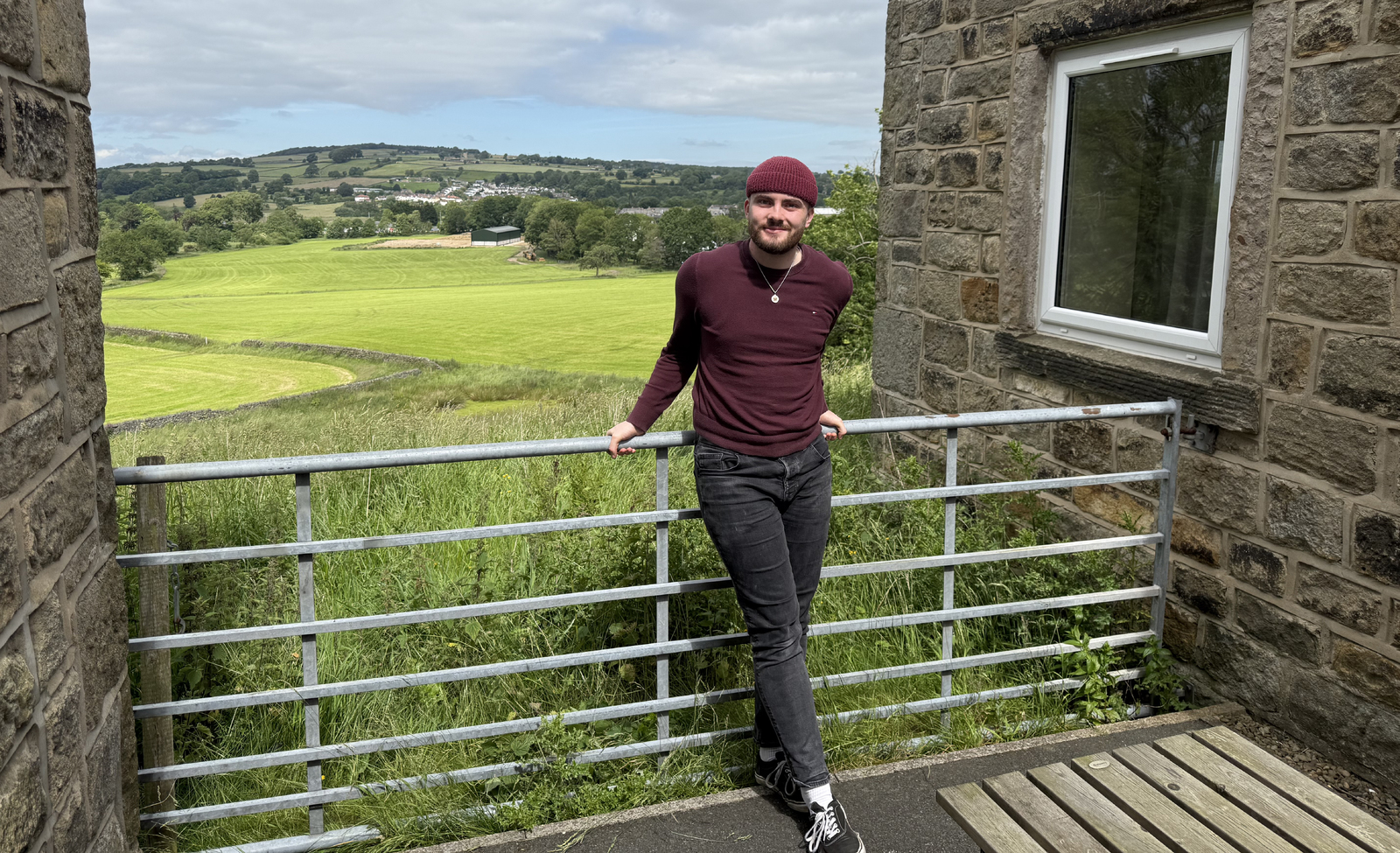
Sam: No, no, come on. No, don't be daft. We've got sheep here
Chris: So, you've been here a year and you've already contributed a lot. You're taking on responsibilities and I'm a firm believer that perhaps we wouldn't see as many people contributing in the ways that they are if we weren't an employee-owned business. I'm looking forward to seeing what else you're going to be contributing to the business moving forward now you're officially an owner. Congratulations and welcome aboard!
















 Back
Back